By Jett
While I live a four-hour drive from the Canadian border, the first country I visited outside the United States was one of the geographically farthest from my home. My gap year has illustrated how academic interests can take you to physical places you’d never expect to go.
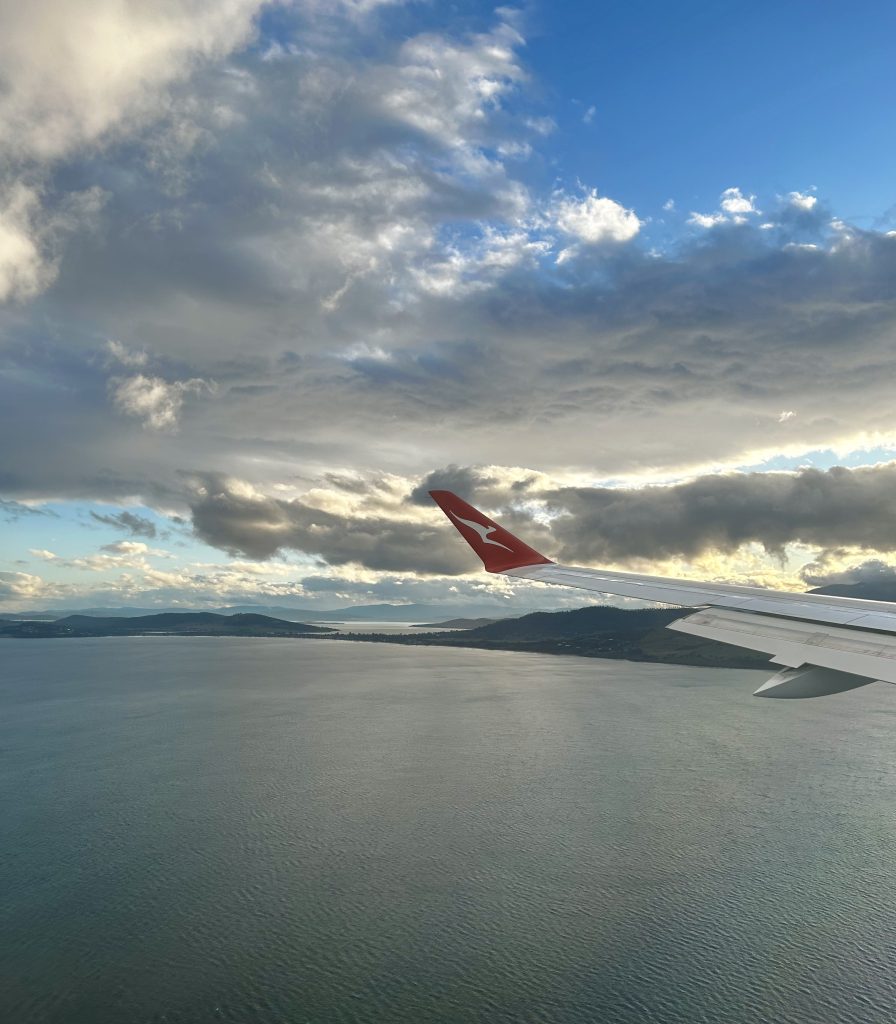
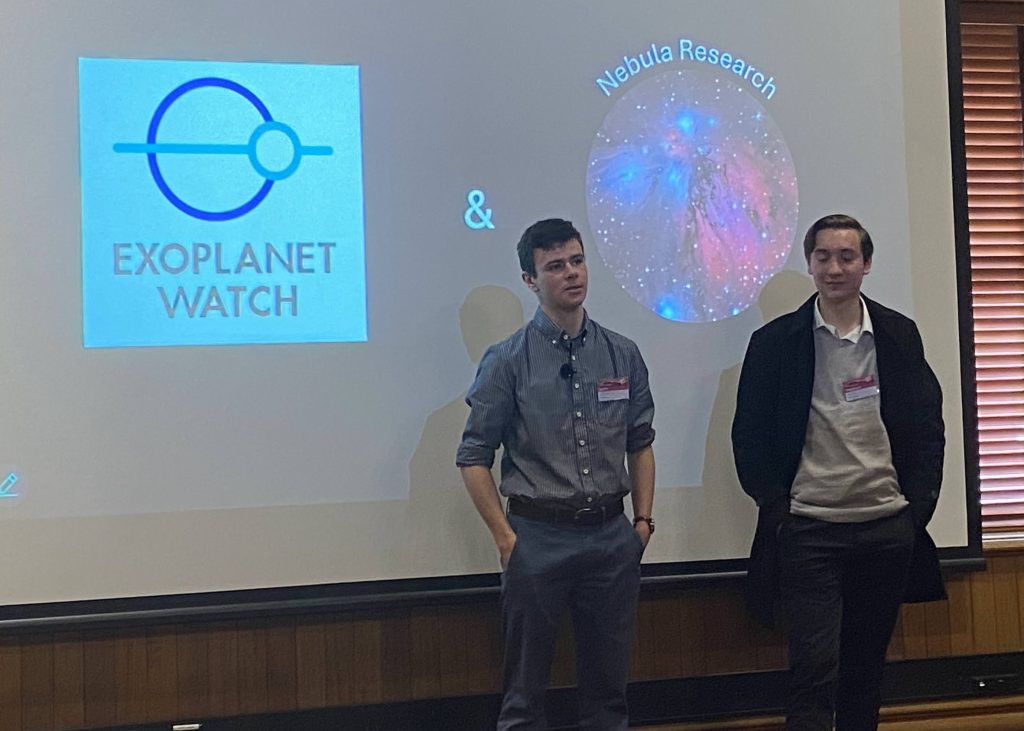
For the first chapter of my gap year, I travelled over 8,000 miles to Tasmania, Australia, to speak at an astronomy education conference (RTSRE). I’m sure when the organizers were planning the conference they assumed I would need to present virtually, but my gap year gave me the opportunity to not only connect with fellow astronomers in person, but also experience another part of the world.
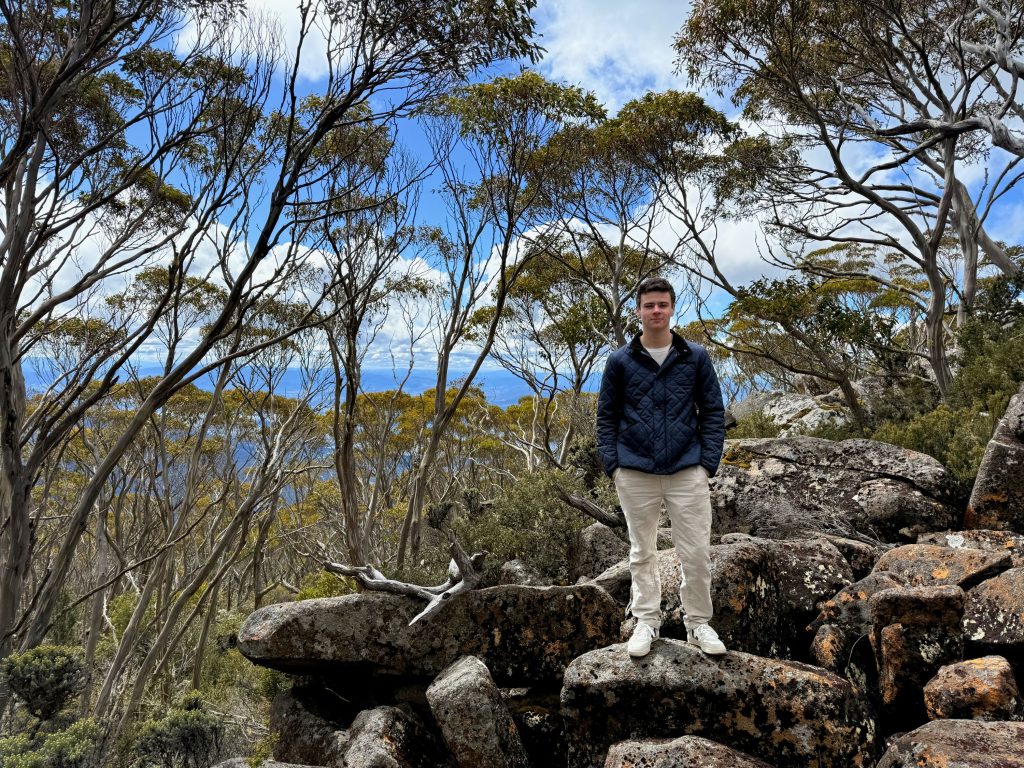
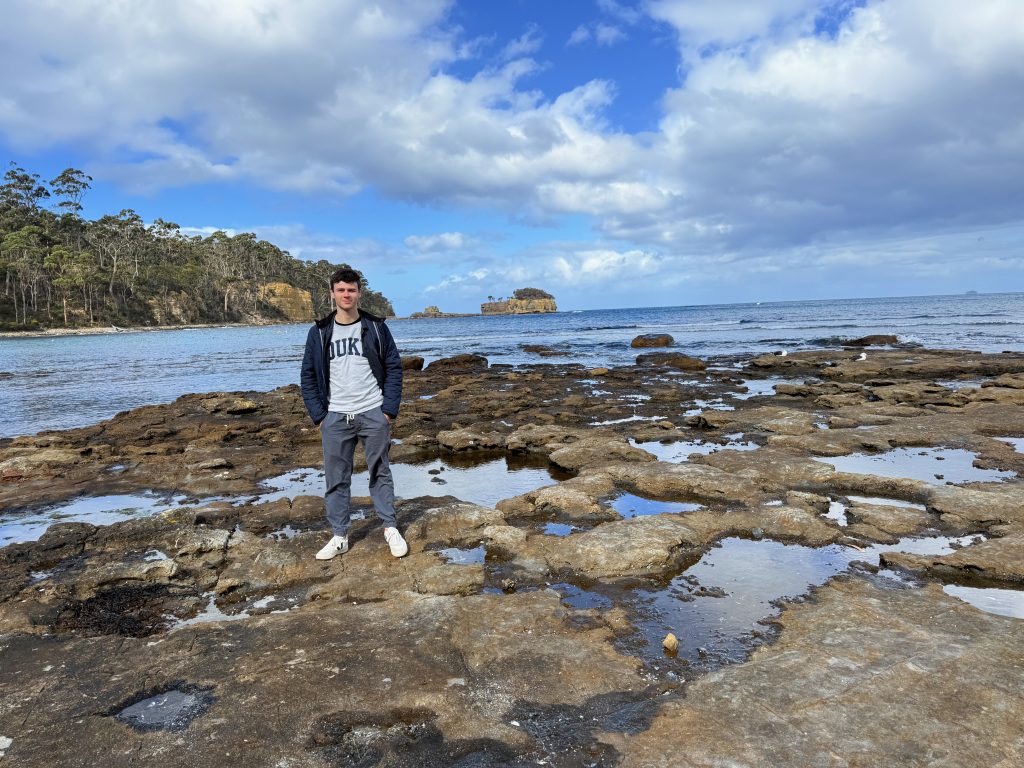
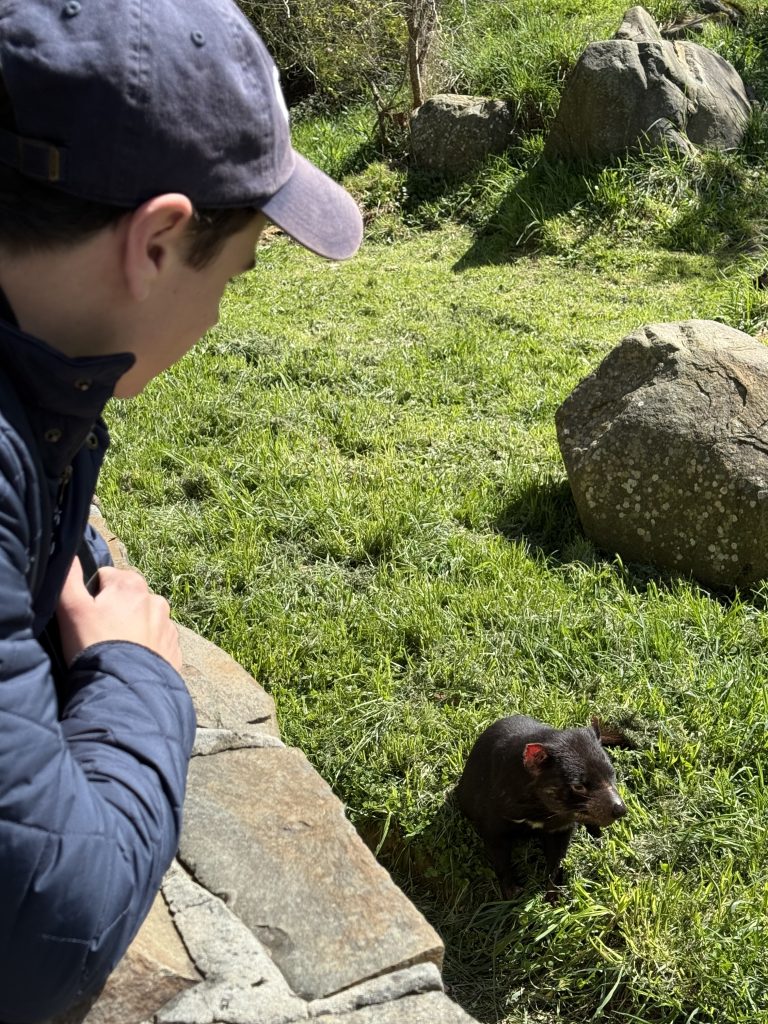
Initially, my mindset traveling to the opposite side of the globe was focused on differences. I had grown up on an island outside of Seattle, but the island of Tasmania, one of the closest inhabited landmasses to the Southern Pole, was a completely different world. Unbelievable, unique wildlife (my new blue-devil status may have biased my appreciation of the Tasmanian devil), soaring sea cliffs, and mountainsides covered with gnarled, alien-looking trees. The Southern sky held few of the familiar constellations or nebula I had grown up laying on the ground looking up at and later studying with my telescope: Orion was standing on his head, and Cassiopeia had become an M (instead of a W). Though the days outside of the conference were filled with logging differences, the nature of the conference was the opposite.
Having spent high school at Stanford University’s Online High School, many of my presentations had been virtual. Presenting in Tasmania forced me from behind my screen. Standing up and presenting in front of people is admittedly a bit nerve-racking, but an important takeaway for me was the role community plays in an environment of this nature. Many of the astronomers at the conference I had crossed paths with before, and seeing their faces as I presented calmed my nerves.
During a pulsar workshop at the conference, I met with a professor who had sent both of his sons to Duke. The additional presence of a UNC professor, who was the keynote speaker, led to some good-natured Duke vs. UNC jabs 10,000 miles from campus.
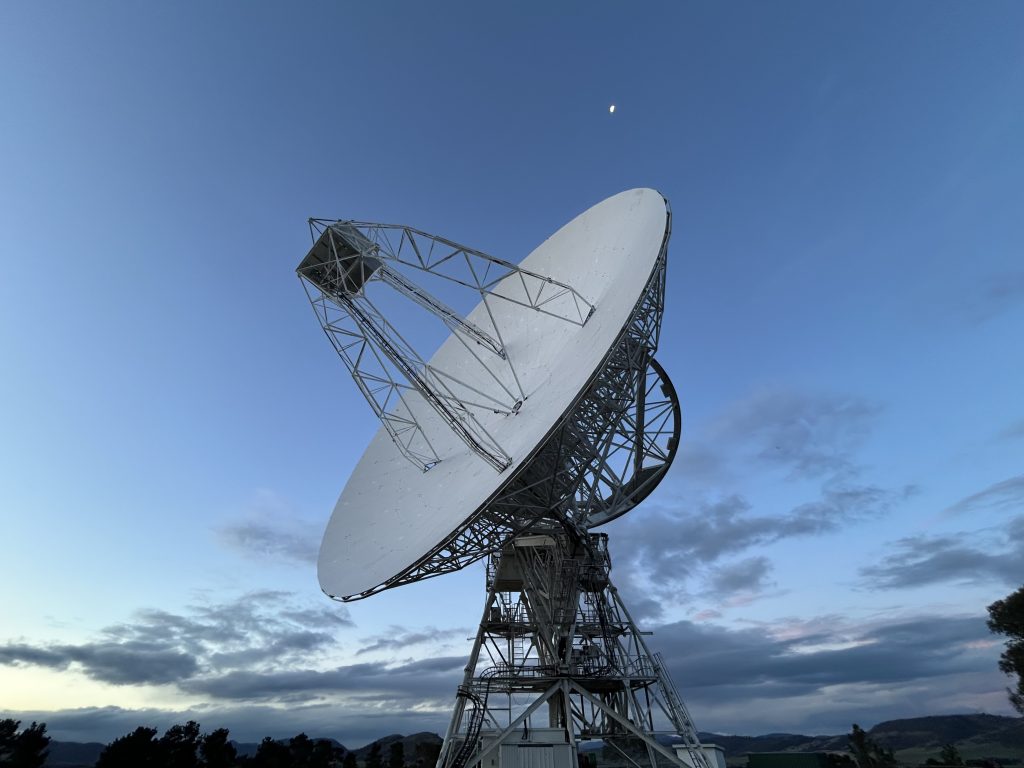
The presentations throughout the conference were fascinating, but the highlight of the trip was an expedition to the University of Tasmania’s radio telescopes. Tasmania, due to its unique ionosphere properties, is considered a birthplace of radio astronomy. Standing under the 26-meter radio dish on Mount Pleasant, I was struck by this group’s common purpose. Astronomy, perhaps more than any other scientific endeavor, is a global one, with a multitude of people striving for the same goal of understanding our pale blue dot’s small place in the universe. Astronomy is a paradox; it is at once the most abstract yet interconnected of disciplines. Each of us in attendance was from different geographical locations and walks of life, but we were united by fundamental aspects of human nature: an innate curiosity and a drive to understand the world around us.