By Anson
The Rawlings Conservatory
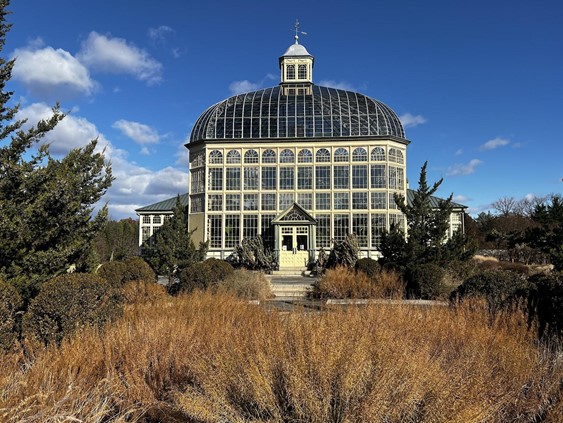
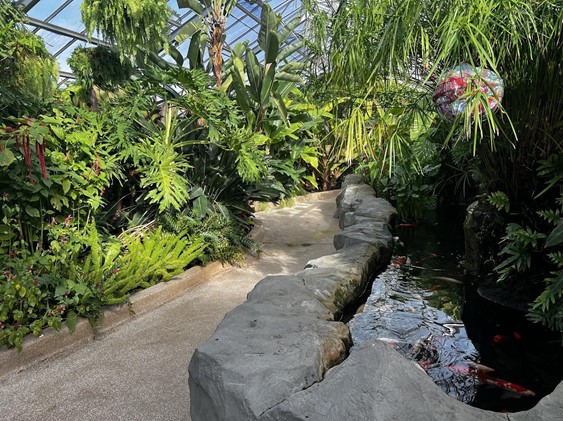
Upon returning home in late November, to keep with the theme of horticulture and history, I volunteered at the Howard Peters Rawlings Conservatory, the second oldest steel-framed-and-glass building still in operation in the United States. Within the conservatory are five vibrant rooms: the Mediterranean House, the Tropical House, the Desert House, the Orchard Room, and the original Palm House from 1888. There is no place I would rather be in the winter; it was hard to complain when I was constantly surrounded by tropical plants and engulfed in warm, humid air.
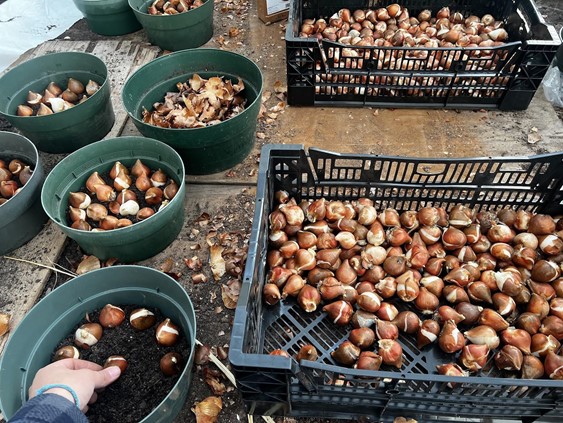
My work ranged from planting tulips for the Spring Show, an organized plant-based display, to setting up underwater-themed decorations in the Desert Room. Over the lunch break, I’d roam the various walkways, piecing together a sketched-out floor plan of my own. This helped me better answer visitors’ questions and lead personalized tours for my family. Despite its relatively small size, the curved paths, parallel rooms, and plant-heavy atmosphere made the conservatory feel like a jungle. I had always wondered how such a marvelous place could be kept up so well, and I am now proud to say that I’ve played a small part in answering that question.
Costa Rica
San José/Máximo Nivel
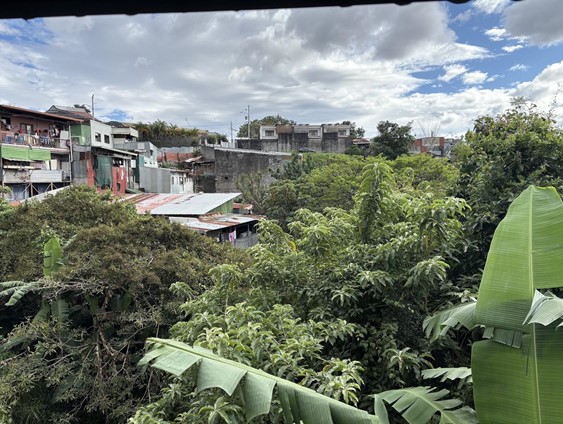
My first stop in Costa Rica, at the beginning of January, was a brief stay in San José, where my temporary host mother, Flora Isabella, graciously hosted me. Coming from the harsh winter wind and snow of Baltimore, looking out my window to be greeted by palms and birds of paradise was an odd feeling.
The following morning, I made my way to Máximo Nivel, my program’s headquarters in San José. During the brief introduction, I learned I’d be taking a long bus ride that day into the Monteverde cloud forest to the coffee farm where I would be working.
Monteverde
After a lengthy trip, I arrived in Monteverde. I stayed in the town of Santa Elena, situated within the rainforest. I lived with a host family who kindly provided me with a room and fresh meals daily. My host mother, Yorleni, cooked much of what we ate as well as operated a nail salon out of a side room in the home. Roy, my host father, roasted and helped deliver the coffee beans from the farm I worked at. Their daughter, Maria, worked on the farm as well, preparing and packaging the coffee for delivery. Their son, also named Roy, had just graduated high school and was on a gap year. In addition to the family, I stayed with another American volunteer, Luca.
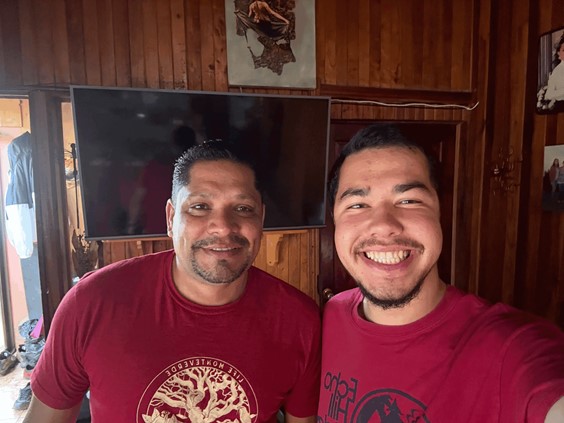
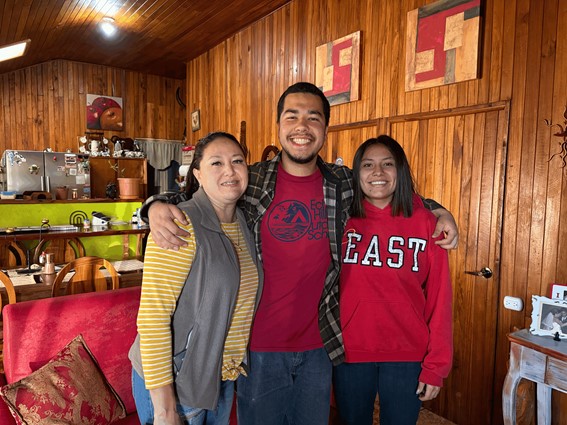
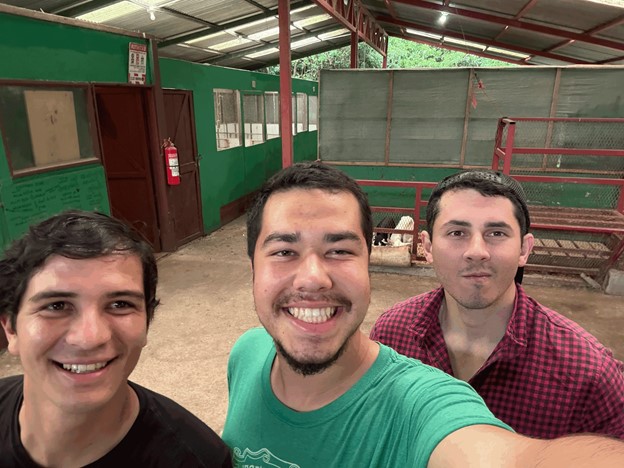
As the sun rose, I would eat breakfast with my host family and make my way (typically through the rain) to Café Monteverde, the coffee farm. From Monday until Friday, I completed tasks ranging from harvesting coffee in the fields to butchering chickens that were included in the meals we ate for lunch.
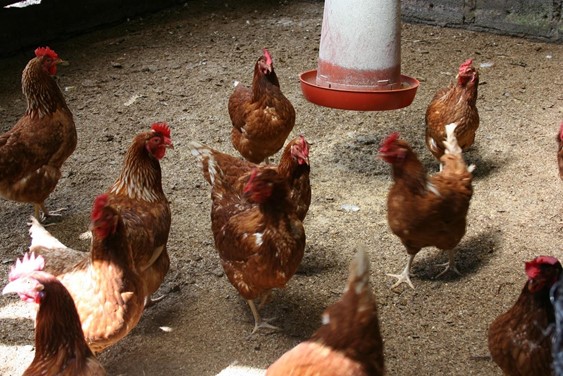
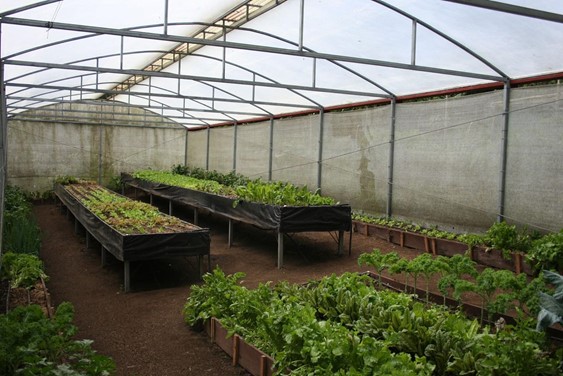
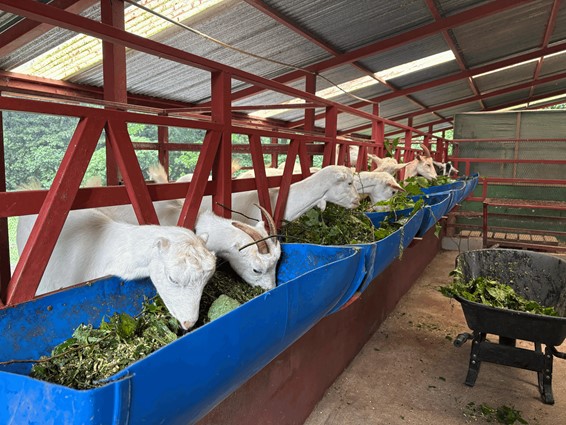
In my first week, I worked mostly on ground care, animal husbandry, and gardening, alongside Oscar, Diego, and Rosa, employees of Café Monteverde. Oscar and Diego primarily worked out of the farm building, which housed egg-laying hens, meat hens, and goats. Alongside them, I cleared the hills and manually ground plant stalks to create feed for the goats, cleaned the goat and chicken pens, provided food and water for them, and collected eggs. I also helped butcher chickens that would be cooked and served later in the week. The farm’s kitchen used a variety of ingredients grown and raised right on the land to provide hearty meals to employees, volunteers, and visiting groups alike.
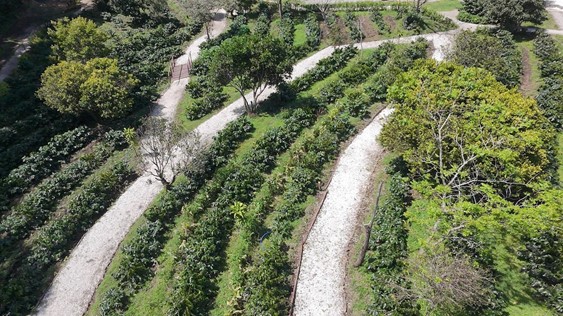
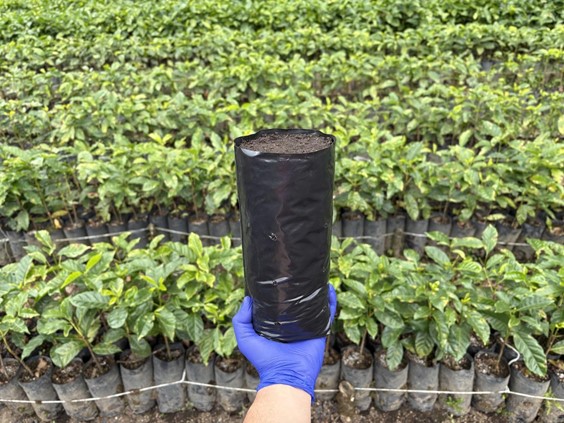
My second week, I was more thoroughly involved in the coffee-picking and processing operations. In the coffee world, there are a series of grades that denote the quality of beans, one being the best to five being the worst, and I was typically working with grade three beans, a less uniform, medium-quality harvest with some defects. I picked all grades of coffee beans at some point, but due to certain coffee regions of the farm encountering diseases and older age, I had less choice as I worked to harvest the fruits while they were still viable, leaving the high-priority beans to the experienced pickers.
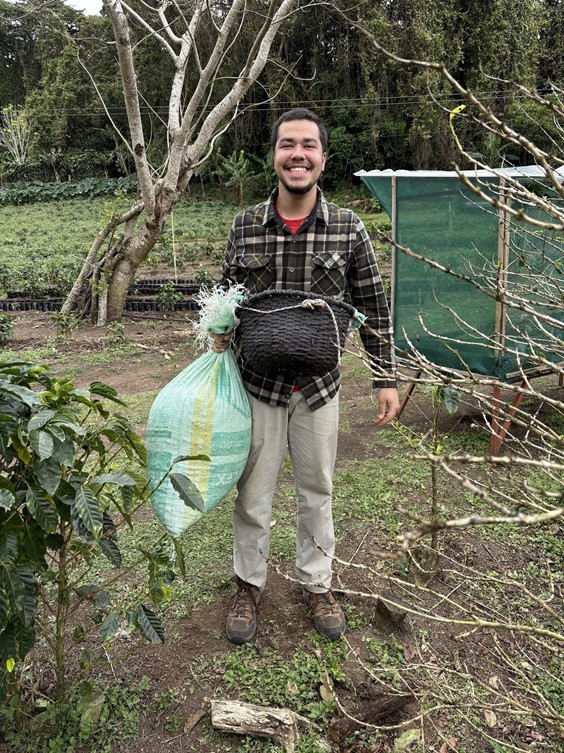
While working to pick the coffee beans, we would often be passed by large groups of Nicaraguan coffee bean pickers who worked with absurd efficiency and speed. I learned in my time spent on the farm that in the peak of the coffee harvesting season, nearly forty percent of the coffee pickers are brought in from Nicaragua. I truly can’t comprehend how much work goes into the production of these deceptively simple beans. I moved throughout the fields, listening to music, working as fast as I could, and despite this, I was only able to fill half of a one hundred pound sack in a day, while the Nicaraguan and Costa Rican workers walked past me with multiple bags picked in a fraction of that time. I can’t say that I will ever gaze upon a bag of coffee the same way again.
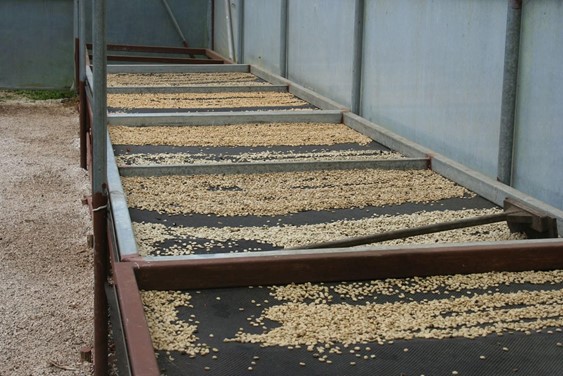
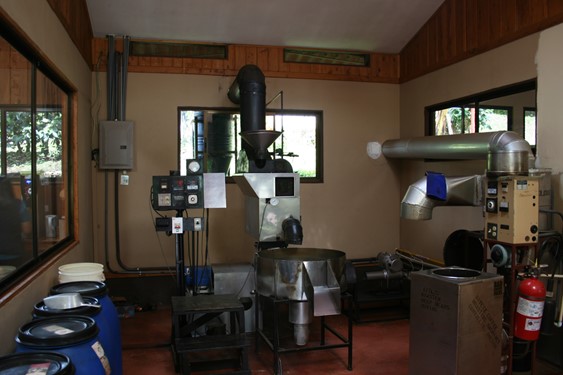
In addition to spending time out in the field, I got an inside look into the entire coffee-making process. When the coffee fruits—cherries—are first harvested, they go through a machine that separates the pulp and the beans. They are then laid out and raked on raised beds where they are processed into different categories such as fully washed, honey process, and natural process; the differences alter the flavor profile from bold and fruity to sweet and acidic. Afterwards, some are taken to the roastery and placed into a machine where they are blasted with flames at specific temperatures, creating light, medium, and dark roasts.
Gallo Pinto
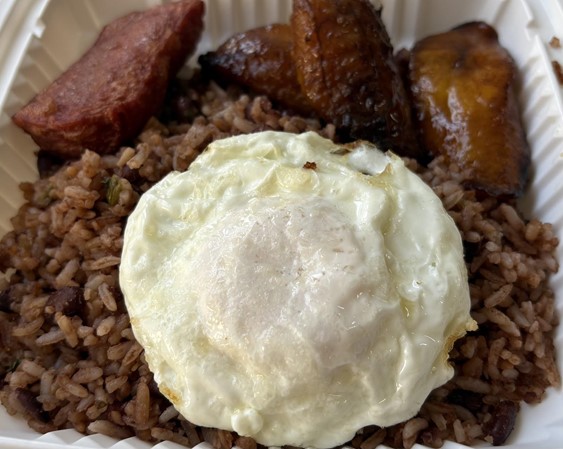
This dish’s popularity in Costa Rica makes it deserving of its own category. The dish typically consists of rice and beans but, from time to time, has additional sides, including chicken, fried plantains, eggs, and tortillas. The English translation of Gallo Pinto is spotted rooster, which is derived from the pattern that rice and beans make when combined. Whether it is breakfast, lunch, or dinner, you can always find someone who is making this dish. At Café Monteverde, we would have it for lunch every single day, and I never once found myself growing tired of it. Commonly paired with freshly fried plantains, diced vegetables, broiled chicken, salad, and cooked eggs, I found myself more than full.
Time Off
As work halted for the lunch period, I made use of this time to stroll through the vast portions of land, encountering plots of coffee trees and troves of animals, from near-threatened bird species to roaming cattle. The serene rainforest environment created an opportunity to simply relax in the midst of the ever-busy coffee estate.
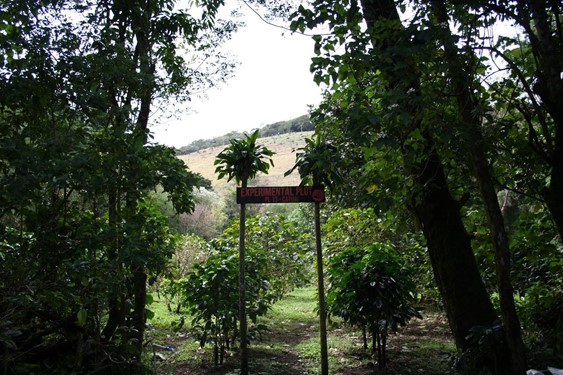
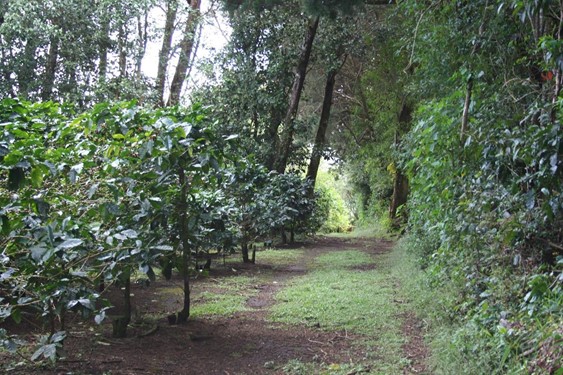
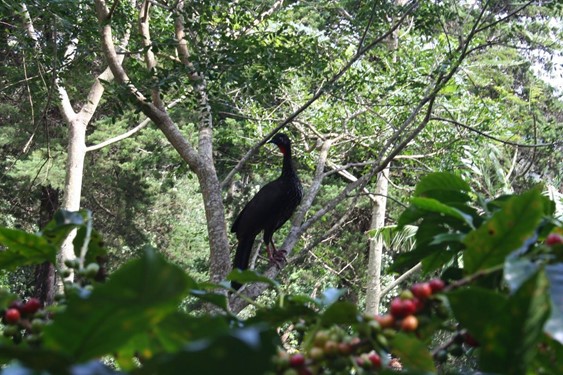
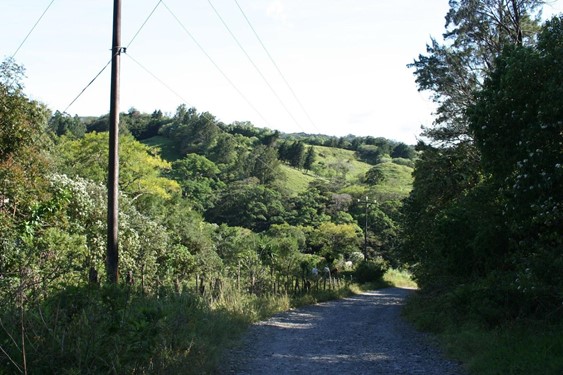
Even the walks back were scenic. After I packed up each day, I walked back home with Luca. As we took the long, winding gravel path home, we encountered an endless number of running streams, horses, cattle, and rolling hills, engulfed in a plethora of tropical fruits and native plants.
Perks of Living in a Rainforest
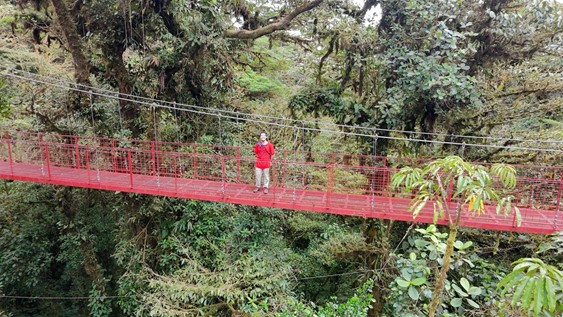
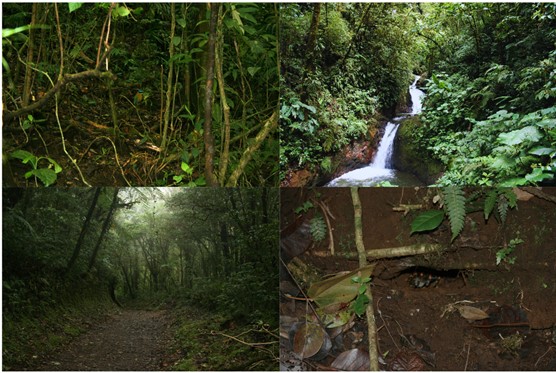
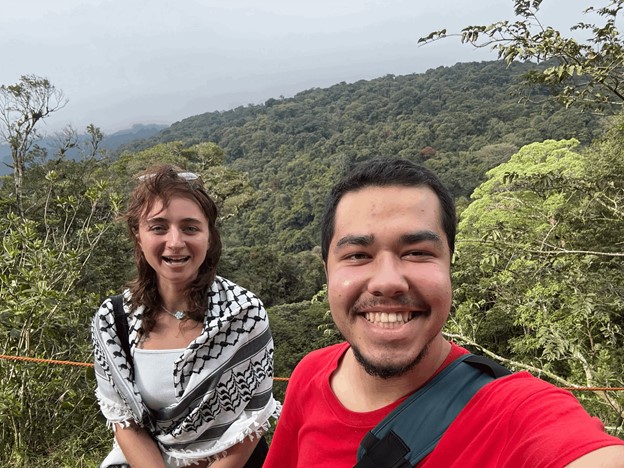
Due to our placement in the middle of a rainforest, Luca and I had no shortage of reserves to visit, and on the weekend we made our way to one. After a grueling two-hour uphill hike and several water breaks, we made it to the Monteverde Cloud Forest Reserve.
The atmosphere here was unparalleled to any other place in Monteverde I had the chance to visit. For one, I was truly isolated as my phone service and any connection disappeared. Secondly, the numerous species, colors, and landforms were awe-inducing: bright-yellow wild ginger to my right, mimosa pudica to my left, quetzals flying overhead, tarantulas crawling between my feet, and waterfalls flowing in front of me. It was a microcosmic paradise.
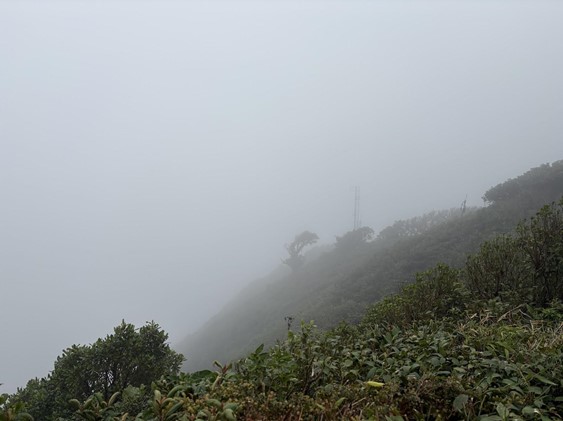
Furthermore, having our heads above the clouds (yes, literally) was a surreal feeling, as we were never quite able to figure out where we were, making the long hike through the reserve feel just that much more intricate and special.
Uruguay
Montevideo
After a couple of weeks in the Costa Rican rainforest, having made new friends, discovering a new family, and obtaining invaluable knowledge about the coffee process, I departed for Uruguay.
At last, I had finally set foot in South America!
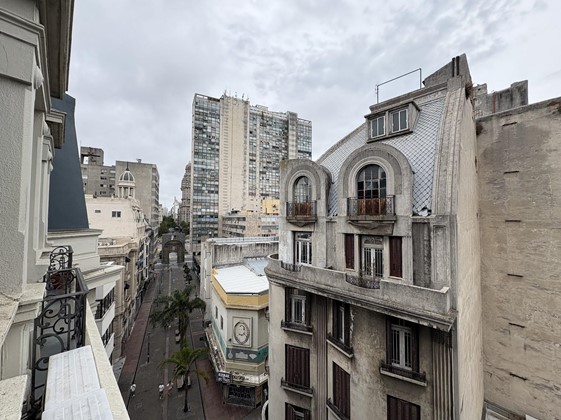
The moment I stepped off the plane, I was confronted by a wave of warm air and a sense of relaxed energy. Montevideo felt distinctly different from the other bustling cities on my itinerary. The air had a subtle saltiness from the coast, and the rhythm of the city felt calmer and more leisurely. I had the privilege of staying in Montevideo’s Ciudad Vieja, a previously walled city that dates back to the early 1700s. As I made my way to my hostel, I was captivated by the cobblestone streets and the mix of grand, old-world facades and more modern, bustling storefronts.
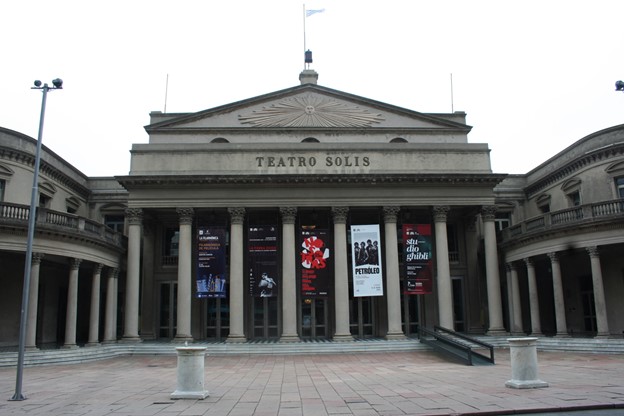
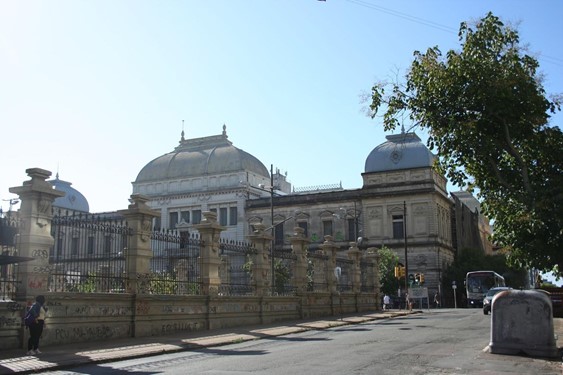
My hostel was nestled in the heart of the Ciudad Vieja, and walking out each morning felt like stepping back in time. The streets were lined with beautifully preserved colonial buildings, and I spent hours alone wandering the narrow alleys, discovering hidden courtyards and antique shops. I often passed the majestic Teatro Solís on my way to grab meals. While I didn’t get to see a performance, just admiring its neoclassical facade and knowing its history as South America’s oldest operating theater was a highlight.
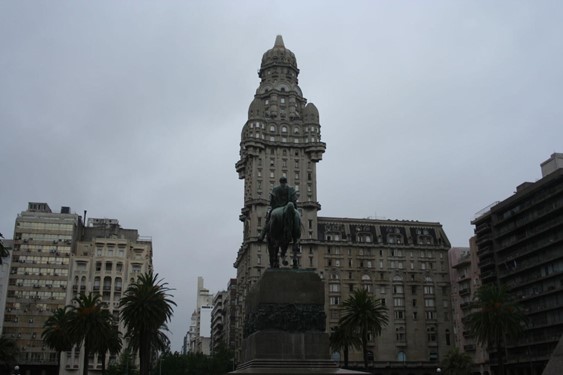
The city’s architectural blend was fascinating. One minute I’d be admiring a faded, pastel-colored building with intricate ironwork on its balcony, and the next I’d turn a corner and be faced with a sleek, modern high-rise. This contrast perfectly mirrored the city’s identity: proud of its history but pushing forward.
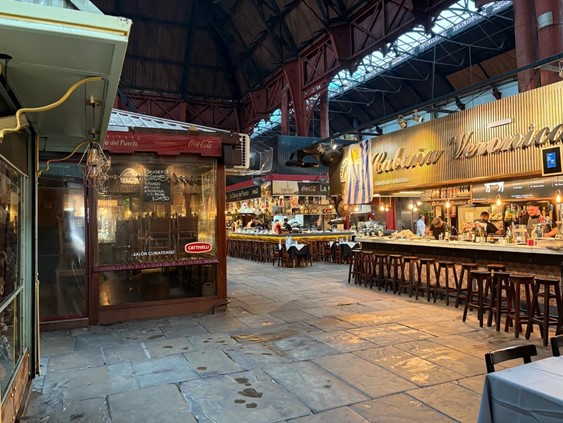
The theme of cattle ranching was everywhere, from the abundance of parrillas (steakhouses) to the art in the markets. It was clear that this part of their history is woven into the fabric of everyday life, not just relegated to museums.
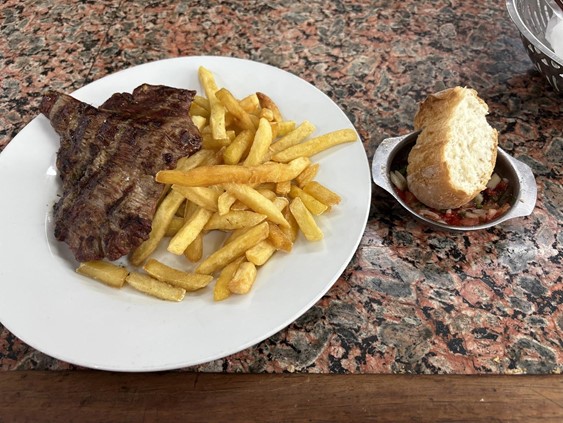
My first meal in Uruguay was an absolute must: asado. This isn’t just a dish; it’s quite truthfully a social event. I went to a local parrilla where the guy on the grill cooked a variety of cuts over an open flame. The aroma of sizzling meat was incredible. I ordered lamb, and it was perfectly charred on the outside, incredibly tender and juicy on the inside, and seasoned simply with salt to let the flavor shine through. It was easily some of the best meat I have ever had.
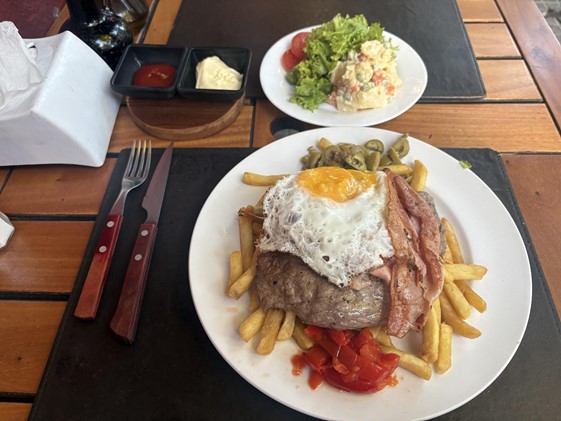
Another must-try was the chivito, Uruguay’s national sandwich, and a meal that I ordered more than once. I expected a simple steak sandwich, but what arrived was a massive, glorious tower of flavor. A thin, tender steak was layered with ham, bacon, mozzarella, a fried egg, lettuce, and tomato. It was fairly impossible to eat with grace, but every bite was a delicious mess of savory, salty goodness.
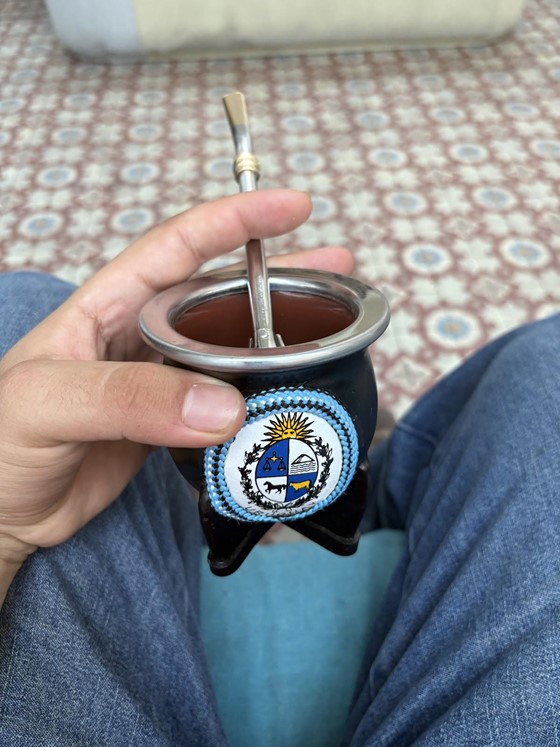
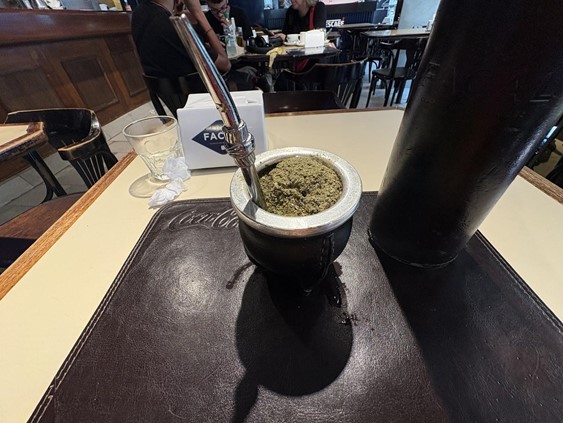
Beyond the food, the most striking cultural staple I encountered was yerba mate (YER-bah MAH-teh). You see it everywhere: people walking down the street with a thermos of hot water tucked under their arm and a gourd and a bombilla in their hand. It’s a deeply social ritual. I was fortunate enough to be offered a sip from someone’s gourd in a restaurant. It had a strong, earthy, and slightly bitter taste at first, but I quickly grew to appreciate it. The caffeine buzz was different from coffee. It was a steady, gentle lift that lasted for hours. By the end of my trip, I was so enamored with the tradition that I purchased my own gourd and bombilla to bring home, a small piece of Uruguay to remind me of my time there.
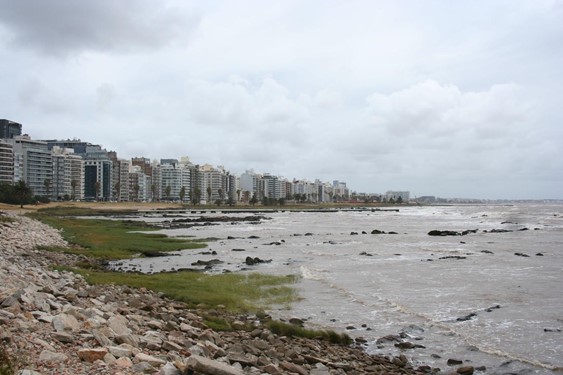
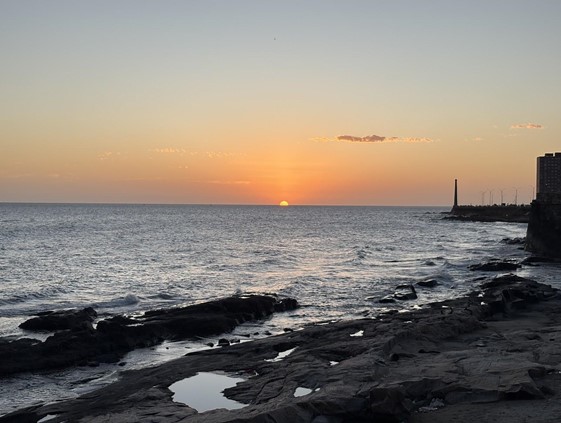
One of my favorite pastimes was walking along the Rambla, the long promenade that hugs the coastline. It’s the city’s place where people jog, ride bikes, sit with a thermos of hot water and their mate, and watch the waves of the Rio de la Plata. The sunsets from here were absolutely stunning, painting the sky in vibrant oranges and pinks.
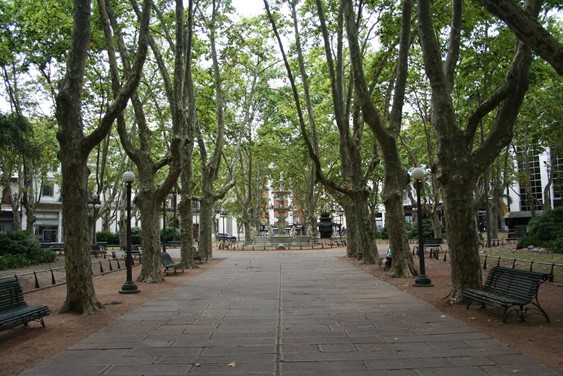
Montevideo is surprisingly green, with beautiful tree-lined parks scattered throughout the city. I spent a lazy afternoon relaxing in one of them, just soaking in the peaceful atmosphere and watching the locals go about their day.
My time in Uruguay, though brief, was a perfect blend of history, culture, and delicious food. It’s a country that feels proud of its heritage and lives life at a relaxed pace. From the unique social ritual of sharing mate to the unforgettable flavor of asado, every experience felt authentic and deeply rooted in a sense of community. Leaving Montevideo, I felt not just one step closer to my goal of visiting all the continents but also a new appreciation for the simple, beautiful traditions that make a place truly exceptional.
Japan
Tokyo
Arriving in Japan in late January, I was instantly hit by a culture shift so profound that words almost fail to capture it. Imagine a city where every imaginable technology coexists seamlessly with ancient traditions: sleek bullet trains effortlessly topping two hundred miles per hour, streets lined with hundreds of cozy micro-bars (izakayas), and even heated toilet seats boasting an almost comical array of buttons! It was a world unlike any I’d ever seen.
I spent an unforgettable week exploring Tokyo with my mom, who had traveled there to perform medical consulting work for a Japanese company. Our days were an enjoyable blend of experiences, from savoring exquisite traditional Japanese cuisine at bustling local izakayas and pristine sushi counters to delving into history at iconic landmarks like the Meiji Shrine and the Senso-ji Temple. We also plunged headfirst into the modern hubs like Shibuya and Shinjuku.
Our journey began with a fascinating tour that offered a fresh perspective on Tokyo’s modern history. We learned how the city’s resilience, particularly after wartime effects, fueled its rapid adaptation of strikingly modern and contemporary architectural styles, creating the futuristic skyline that we saw from atop the Tokyo Metropolitan Government Building, a building that let us see Tokyo in its entirety.
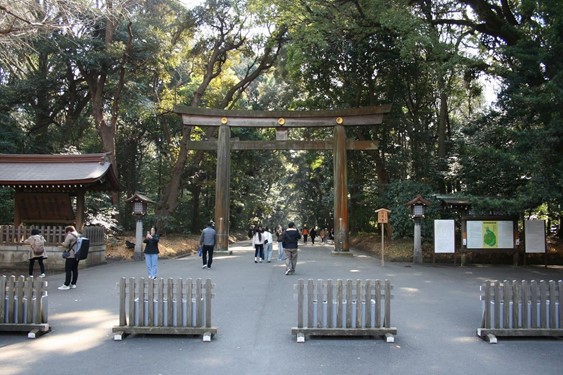
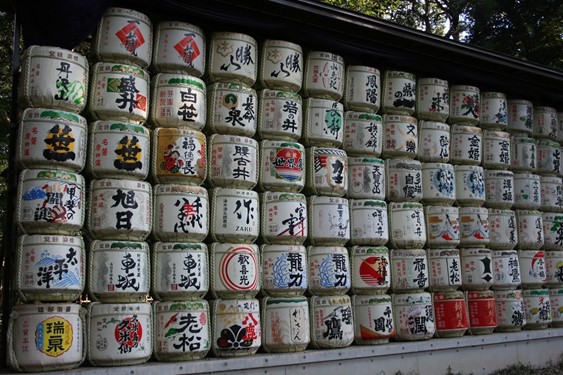
Leaving those densely lined streets behind, we entered the serene Meiji Shrine, where we received our first introduction to the Shinto religion. Its traditional shrine architecture, featuring iconic torii gates and main halls, immediately intrigued us. We found ourselves immersed in ancient rituals, participating in the quiet water-purity cleansing and witnessing people writing their wishes on emas, the sacred prayer tablets. It was an experience that felt both deeply personal and timeless.
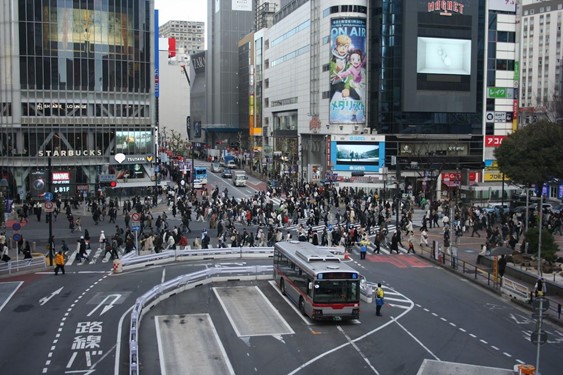
Next, our adventure took us to Shibuya, home to one of the world’s most famous and busiest foot crossings: The Scramble. It was mesmerizing to watch thousands of people flow across the intersection simultaneously, yet somehow, no one bumped into each other. Beyond this incredible spectacle, Shibuya also buzzed with cutting-edge youth fashion and a collection of culture-rich department stores.
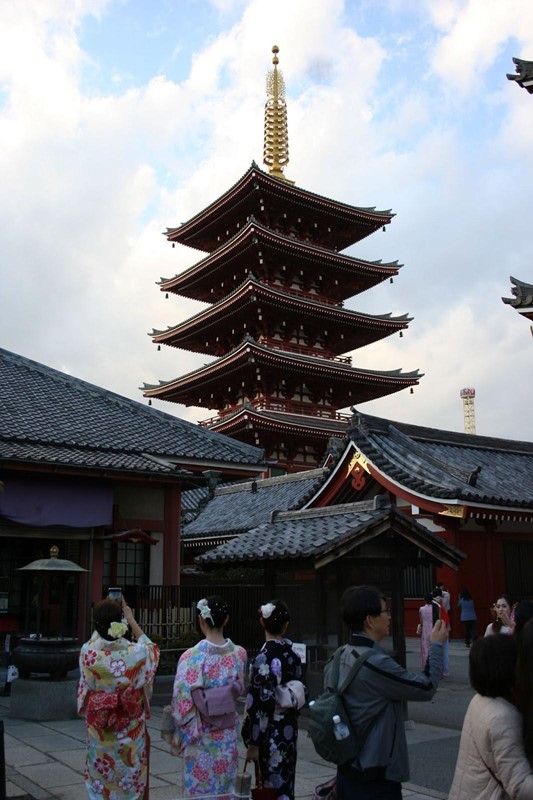
We finished our time with a peaceful stroll through the Taitō ward, Tokyo’s historic heart. We roamed vendor-lined footpaths, discovering numerous aromas of street food and intricate handicrafts at every turn. Our exploration of Taitō culminated in a delightful meal of rotating sushi, followed by a sampling of strawberry mochi, all enjoyed in the shadow of Asakusa Kannon, the prominent Buddhist temple that is the spiritual soul of Taito.
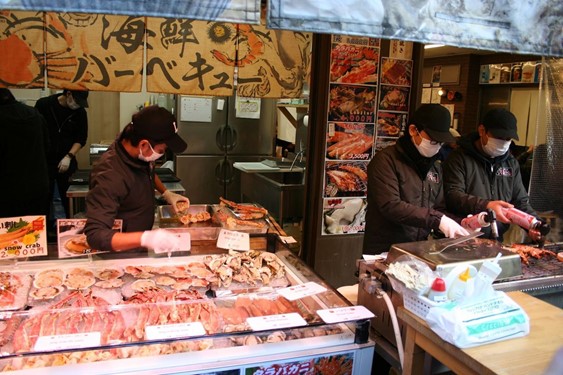
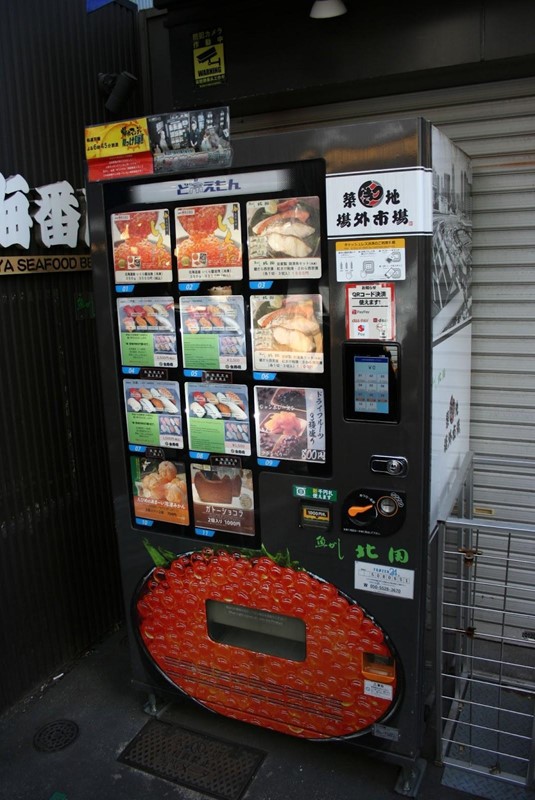
Later in the week, our penchant for food guided us to the legendary Tsukiji Market. Though the famous wholesale tuna auction has moved, the Outer Market still flows with energy: a maze of stalls overflowing with the day’s freshest catches and an astonishing variety of Japanese delicacies. The air hummed with the chatter of vendors and the sizzle of cooking food. Here, we embarked on a delightful food crawl. We consumed melt-in-your-mouth, freshly grilled Wagyu beef skewers; enjoyed sweet, fluffy tamagoyaki (Japanese omelets); sampled an assortment of savory fish cakes; and, of course, consumed fresh sushi! And for a sweet finish, we found fresh strawberry mochi.
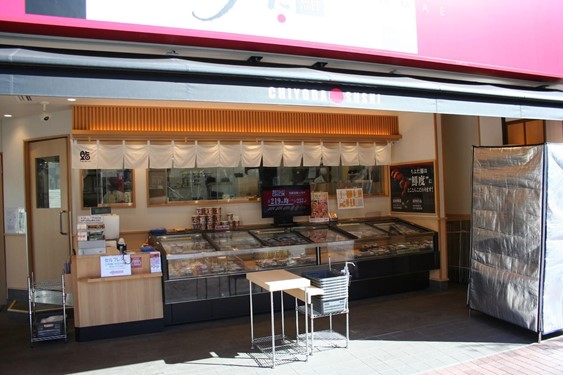
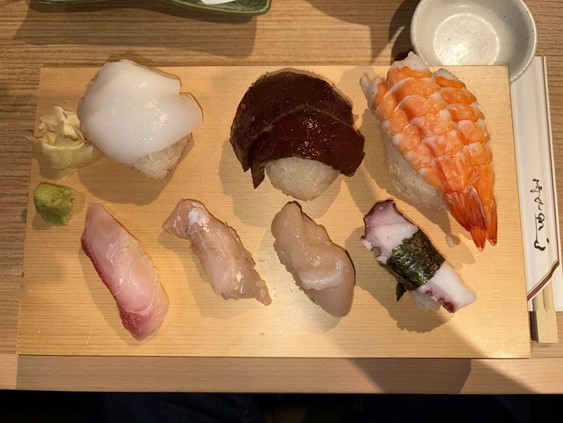
Our final tour allowed us to try some foods that we hadn’t sampled yet. Beginning with a sushi restaurant, we were introduced to Edomae-style sushi, a relic from the past that reflects Tokyo’s former name, Edo, and is at least three times larger than traditional sushi. Rivaling the size of my fist, these creations were astonishing not just in their taste but also in their appearance.
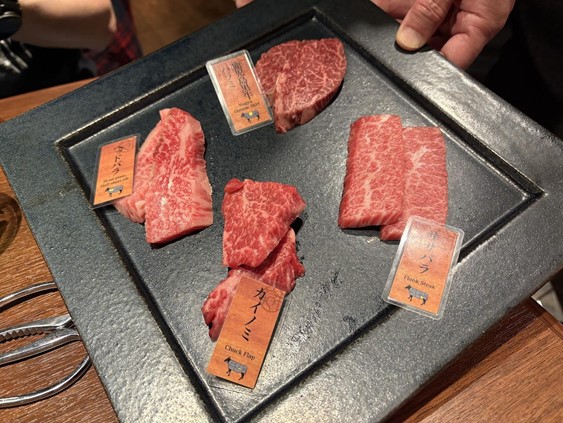
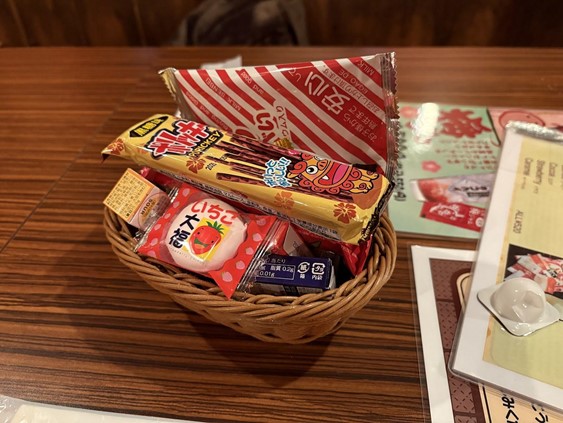
We were also fortunate to have an additional encounter with Wagyu beef. We sampled four individual cuts, all cooked before us. To top off the night, we attended a unique candy shop that, unlike any place I have been before, had a buffet-style, all-you-can-eat candy temple situated in the middle of the restaurant.
Mount Fuji
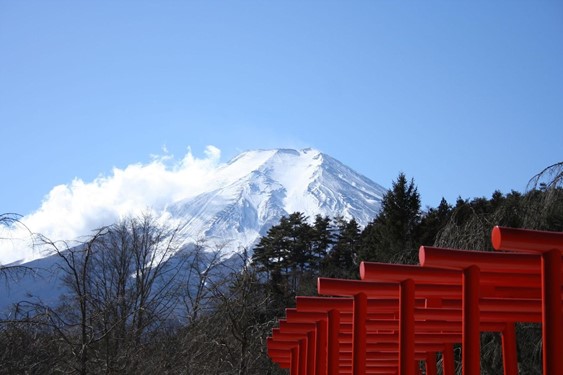
Having it in my sight for the entirety of my time in Tokyo, it only made sense to travel up Mount Fuji. The snow-capped goliath is just as impressive up close. Due to the winter weather, we were only able to make it to the 4th station, but we still had a phenomenal view of the icy mountain top dotted with trees. Afterwards, we ate lunch with the mountain in our sight through the window and took a gondola ride along the Hakone ropeway to see Mt. Fuji from an additional angle.
After our tour and exploration, we took the bullet train back into Tokyo, getting to experience the three hundred kilometer per hour train that somehow allows you to drink out of a completely full coffee cup with ease. After the endless encounters with groundbreaking tech, it shouldn’t have been shocking; however, I couldn’t help but marvel at it.
Auckland
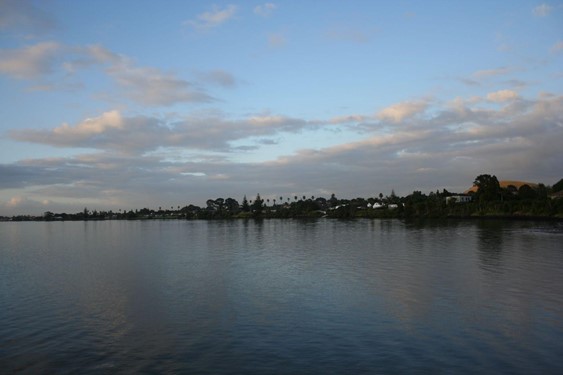
As February began, I traded once more the familiar chill of the northern hemisphere for the lush, vibrant warmth of New Zealand. From the moment I arrived, I was surrounded by rolling green spaces, beaches regularly dotting the coastline, and a climate so warm that the nights were a gentle, humid embrace. There were absolutely no complaints to be had. Here in Auckland, I deviated from my traditional horticulture-based volunteering and shifted my focus to a pressing global issue: coastal litter cleanup.
Sustainable Coastlines
Nestled along the bustling harbor, I found my new home away from home: Sustainable Coastlines. This was more than just a charity; it was a community, a living hub of passionate people brought together to engage in litter cleanup, auditing, and analysis. They’ve built a truly remarkable tool called Litter Intelligence, a website that serves as a public database for cleanup crews. Volunteers can log information from their litter surveys, and the data is freely available for anyone with an interest in climate research. Across New Zealand and a collection of Pacific Islands, a network of designated clean-up sites has been established, each with a defined boundary, typically within the range of one thousand square meters. After a few months, volunteers return to these exact same spots, redoing the collection within the same boundary to assess litter trends and measure the impact of human activity over time.
Each morning, I would make the pleasant walk from my hostel to the Sustainable Coastlines headquarters. Once there, we would prepare the van, loading it with large collection bags, auditing equipment, and all the necessary safety gear. Our sites for the week were pre-planned, and we would travel to these locations to collect the litter in preparation for its entry into the Litter Intelligence database. The work was tangible; however, the vast amounts of recovered litter were, at times, depressing.
The litter, once collected, was sorted into various categories with almost forensic detail, including, but not limited to, paper, soft plastic, hard plastic, wood, foam, metal, and fabric. Once the pieces were sorted, they were counted, tallied, and then weighed. This extra step provided crucial context to the data, explaining, for instance, why a single, heavy piece of metal was so significant despite being a solitary item.
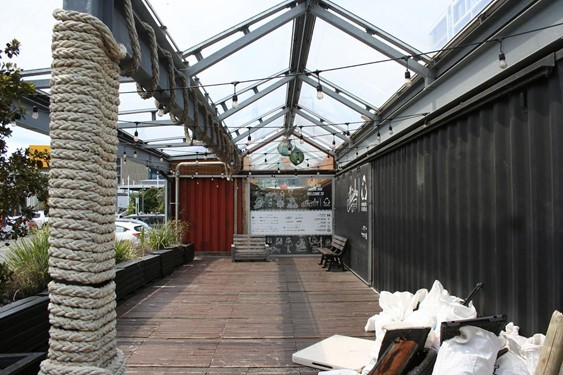
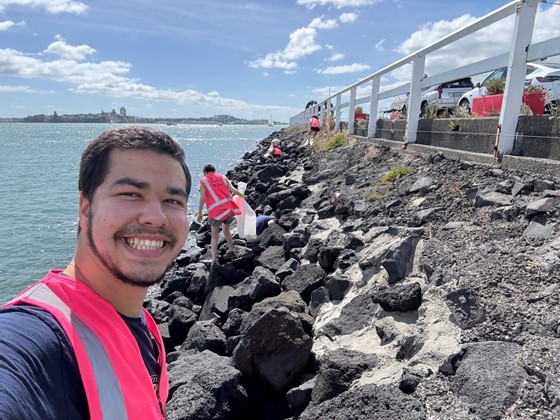
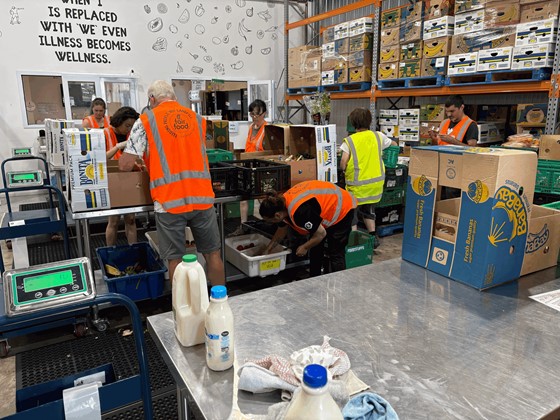
In addition to our standard beach clean-ups, we also had the opportunity to spend time volunteering at Fair Food, a wonderful charity that takes advantage of food surpluses from supermarkets and food providers. It kept in line with the theme of service: rescuing perfectly good food and using it to feed people in transitional housing and domestic violence shelters.
The Attic and “The Attic Cook”
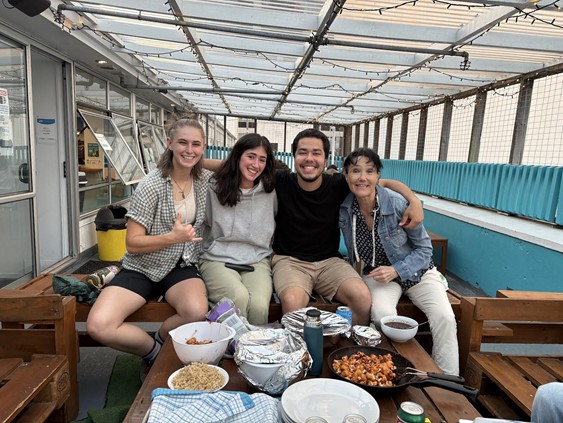
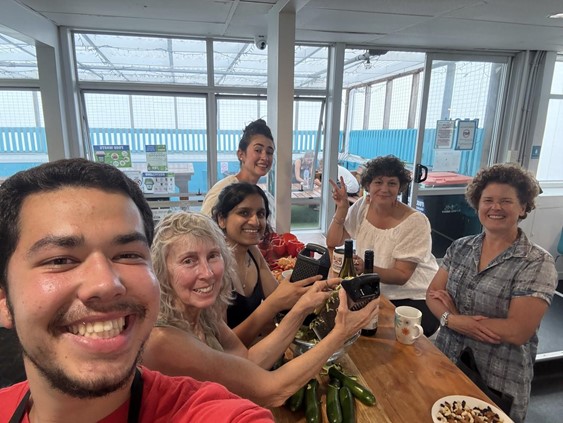
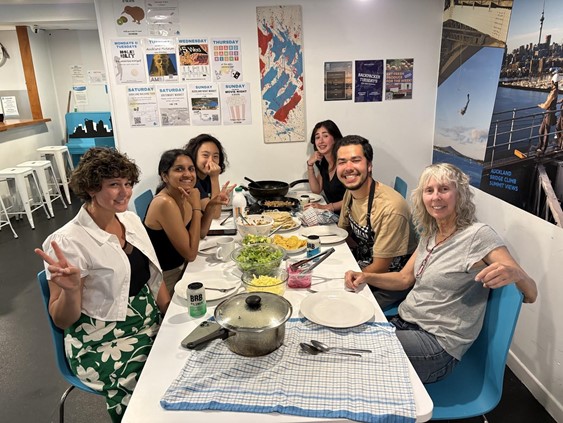
A truly great feature of my program was the hostel they situated us in. Known simply as The Attic, this place served as our communal home. It boasted a phenomenal cooking space: a true gem for travelers. I wasted no time taking advantage of the opportunities it afforded. The first week, my mission was to cook solely New Zealand dishes: crispy fish and chips, gooey Southland cheese rolls, savory whitebait fritters, and classic kiwiburgers, to name a few.
However, as I met people from around the world, my culinary focus shifted. I began to cook their dishes as a way to better connect with them and learn more about their cultures. It was a fantastic exchange of recipes and stories, both beneficial to my progression as a cook and a delicious way to explore new cuisines. By the end of the month, I proudly accepted the title of “The Attic Cook.”
Over the course of a month, my cooking expanded. I had the pleasure of cooking Dutch stamppot, French coq au vin, Swiss rosti, handmade Mexican tacos, fresh Greek kolokithokeftede, Middle Eastern mezze, and a rich Indian curry. The kitchen was always a lively hub of activity, filled with laughter, conversation, and the aromas of shared meals.
The Remarkable Nature
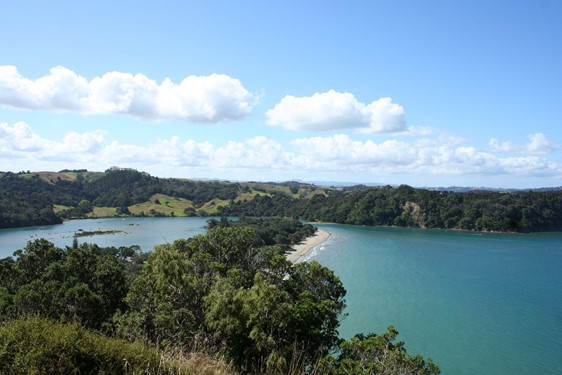
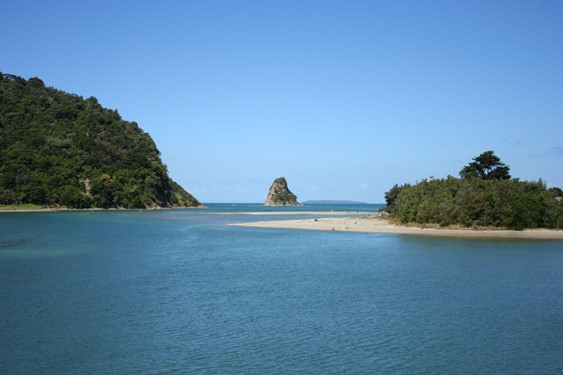
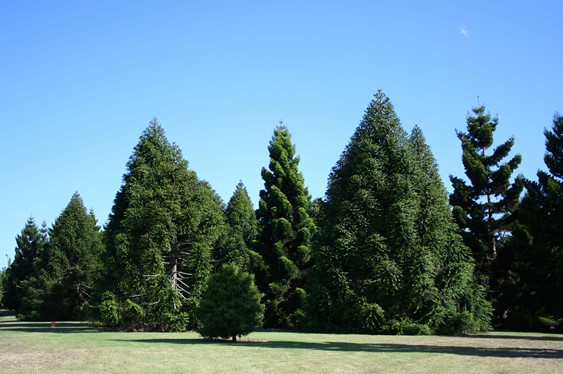
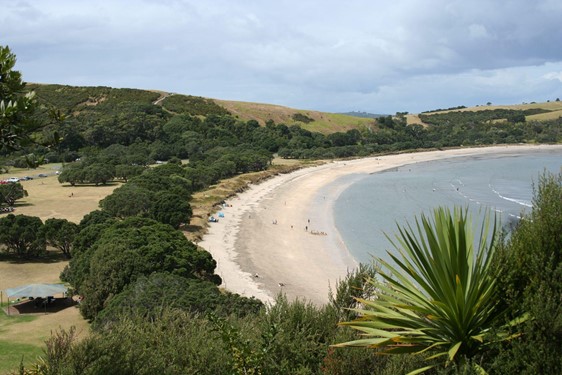
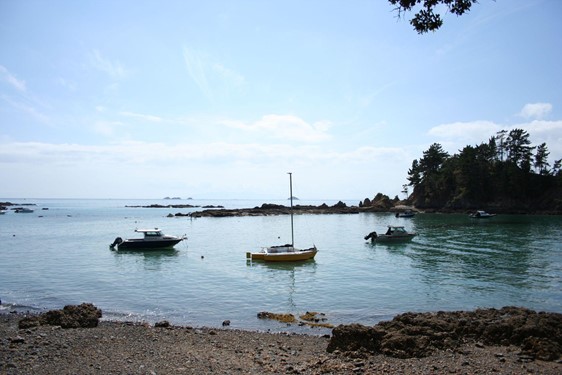
One of the most surprising and beautiful aspects of Auckland was the accessibility of its natural wonders. Traveling just thirty minutes in any direction from the city center, I was able to find an abundance of natural landmarks: stunning beaches and dramatic coastlines, serene natural reserves, hidden islands, or thick, verdant swaths of native vegetation. In a city that is constantly buzzing with people and a perpetual cycle of construction, it was a true paradise to have these peaceful areas so readily available at my choosing.
Another incredible feature of my program was the public transport card. This little card was a golden ticket, allowing us to take practically any bus, train, or ferry around Auckland and the surrounding areas. As my day at Sustainable Coastlines wrapped up and we submitted our final data and analysis, I would hop on a nearby bus and make my way out of the city. From the afternoon until it was time to head back and cook dinner, I spent my time completely immersed in nature.
Each and every day, whether it was after work or on my weekends and public holidays, I successfully completed my self-assigned mission of visiting a new spot. The city was my gateway to an endless exploration of the outdoors.
Wellington
When my month-long coastal cleanup project came to an end, I flew south, to the capital of New Zealand: Wellington. I want you to imagine the impossible lean that Michael Jackson pulls off in the “Smooth Criminal” video. Seems exaggerated, right? A move that defies the laws of physics? Well, here in Wellington, one of the windiest cities in the world, this is a move I could genuinely pull off on the windier days. Due to its unique position on the edge of the Cook Strait, the wind is perpetually funneled into the city’s streets like a natural wind tunnel. I got used to it, a personality trait of the city itself, but it was always there, waiting to knock an unsuspecting tourist off their feet or whip my hair into a chaotic frenzy.

Wellington has a neat feature: its downtown is a crescent-shaped area of land that finds itself situated along a beautiful bay. It’s a city built on a dramatic topography, where the urban landscape hugs the water’s edge. From the bustling downtown core, the homes and buildings don’t just stop; they cascade up the steep, lush green hills behind it, giving the city an amphitheater-like feel. It’s a city that I explored on foot, with every winding street and steep staircase offering a new, breathtaking view of the harbor below. The colorful wooden houses dotting the hillsides created a mosaic, a beautiful contrast to the deep blue of the bay.
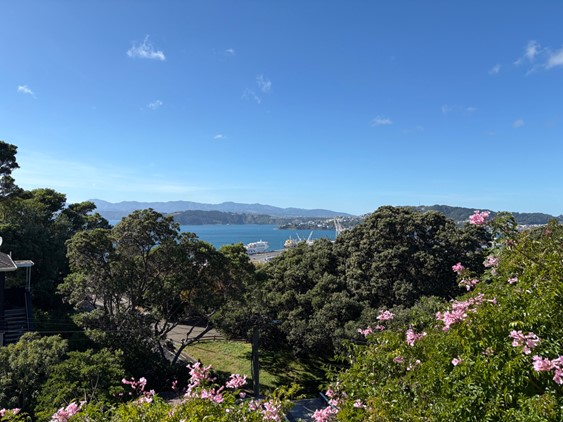
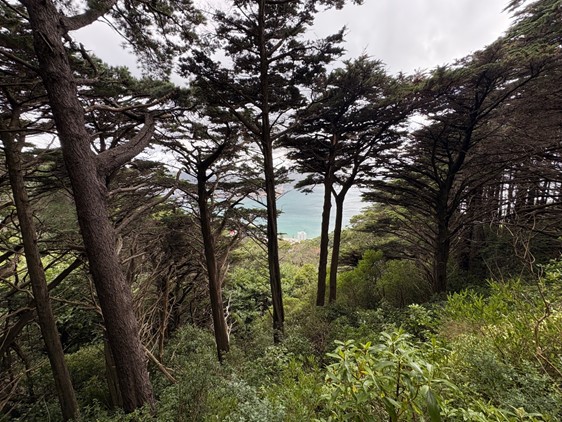
Nestled within those hills, Wellington has a collection of exhibits, from quirky art installations to world-class museums. A ride up the iconic red cable car is a must, not just for the charming journey but for the panoramic view from the top.
Also tucked away in the hills is the Zealandia Ecosanctuary, a 500-acre fenced reserve dedicated to restoring New Zealand’s native forest and wildlife. Stepping through the gates felt like traveling back in time, surrounded by species that were once on the brink of extinction. It is truly a reflection of the city’s commitment to preserving its remarkable natural heritage, despite modernization.
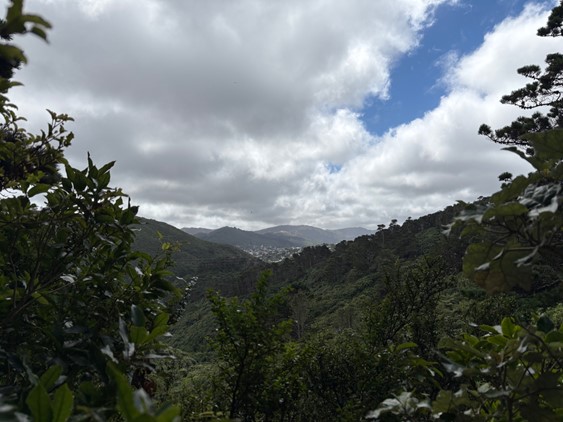
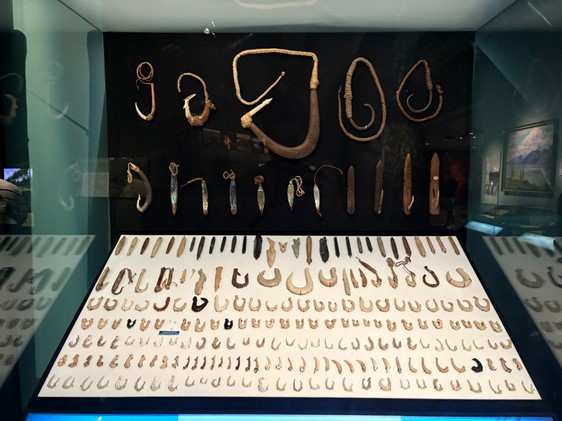
Of course, no visit to Wellington would be complete without exploring its history and culture. The Te Papa Tongarewa, New Zealand’s national museum, is an absolute must-see, offering insights into the country’s unique heritage and its indigenous Māori culture.
Other Notable Photos